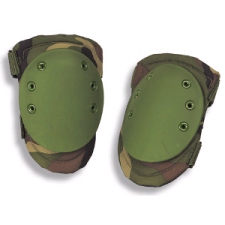
 Hatch
Centurion Kneepads
Hatch
Centurion KneepadsWhat sort of protective equipment is useful in paintball?
Basic protection is provided by:
Many woodsball players also seek additional protection for the rough and tumble of recball play. This protects them not only against paintballs, but also the surrounding environment.
These come in 3 main types: 'military', paintball and other.
Hatch
Centurion Kneepads
Synopsis
Many woodsball players wear these, not only because they fit in with the 'mil-sim' look, but because they offer good protection and are rugged. Most popular are the kneepads such as Hatch 'Centurion' or Blackhawk 'Hellstorm'. These are worn outside of clothing and offer a hard plastic protection with soft foam backing. Worn on operations by Armies and SWAT teams these have been proven not only in combat. As a result, they are ideal for woodsball.
Cost: c£20
Pros
Superior protection to 'soft' kneepads
Better looking and more appropriate than say skateboarding kneepads
Can be purchased in a variety of colours to match camouflage
Cons
Straps can be stiff initially and take getting used to. This will ease with time and washing.
Large amounts of sand can cause problems with Velcro straps.
Paintball magnet - paintballs will not bounce off these
Tips: Such kneepads are machine washable - let them dry and scrape large pieces of mud off. Place kneepads in a gauze wash bag and ensure that there are other items of clothing in the washing machine to absorb impact. Kneepads can be washed on a cool cycle and then left to dry.
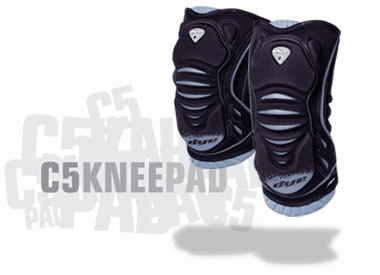 Dye kneepads
Synopsis
Specifically designed for paintball these are traditionally made of a combination of rubber and similar materials with stronger 'armoured' material at key points. They can be worn inside or outside of trousers. They are primarily aimed at 'speedballers' playing on mowed grass or astro rather than in woods, rocks or buildings.
Cost £15-£35
Pros
Specifically designed for paintball
Can be more comfortable and ergonomic than military kneepads
May offer greater 'bounceability' vis-a-vis military kneepads
Cons
Offer less protection against the environment than military kneepads
Less robust than military kneepads
Other types of kneepads can be worn for paintball and can provide certain levels of protection
Indoor Volleyball kneepads
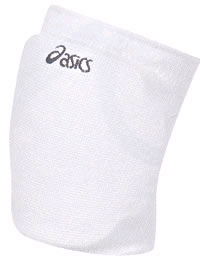 Volleyball
kneepads
Volleyball
kneepads
Synopsis
Soft material kneepads designed for indoor volleyball that can be worn inside trousers.
Cost c£10
Pros
Cheap
Can be more comfortable and ergonomic than military kneepads
Cons
Offer less protection against the environment than military kneepads
Less robust than military kneepads
Prone to slipping when player is sliding on the ground.
Skateboard kneepads
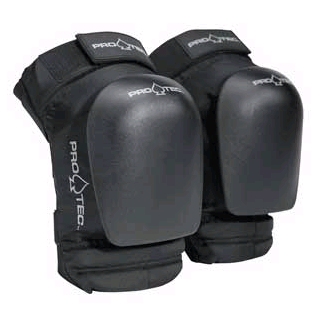 Pro
Tec Skateboard kneepads
Pro
Tec Skateboard kneepads
Synopsis
Hard shell kneepads with inner soft material. Worn outside of trousers.
Cost c£10-£30
Pros
Variety of prices
Offer more protection than indoor volleyball kneepads
Can be obtained from your local 'extreme sports' shop.
Cons
Can look somewhat out of place depending on style or colour
Less robust than military kneepads
Paintball magnet - paintballs will not bounce off these
These come in 3 main types - paintball specific pads that offer protection from wrist to elbow, soft elbow pads worn inside clothing, hard shell 'military' style elbow pads worn outside of clothing.
Paintball specific Forearm-Elbow pads
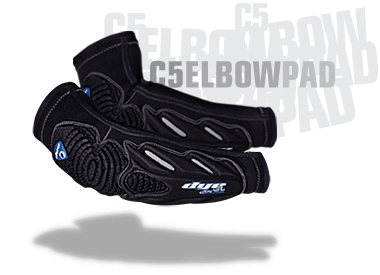 Dye Elbow Pad
Synopsis
Specifically designed for paintball these offer a player superior levels of protection while not restricting movement. A recommended example of these is the Dye C5 forearm pad which can be worn inside of
Cost: £20-£40
Pros
Good protection for both arm and elbow
Less likely to slip than internal soft elbow only pads
Offer some 'bounce ability' - more so than external military style kneepads.
Lower profile than military elbow pads
Cons
Hotter in the summer than elbow only pads
Can be expensive
Tip: Spending money on a pair of Dye C5 elbow pads is a wise investment. They are ergonomically design and not only protect the elbows from impact damage, but help prevent 'bunker rash' on the forearms when sliding on the ground. They are less prone to slip than internal soft pads and don't increase your profile.
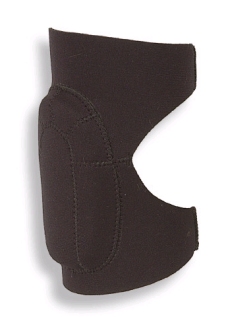 Hatch
neoprene elbow pads
Hatch
neoprene elbow pads
Synopsis
Fabric foam padded elbow pads worn inside of combat clothing
Cost: TBA
Pros
Offer some 'bounce ability' - more so than external military style kneepads.
Lower profile than military elbow pads
Cons
Can slip when body sliding
Do not protect forearm
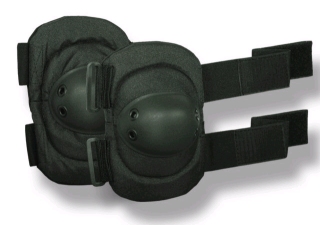 Hatch Centurion Elbow pads
Synopsis
Counterpart to the Hatch Centurion kneepads, these elbow pads offer a hard plastic shell with foam inner. They offer superior impact protection to fabric only elbow pads.
Cost: £15
Pros
Offer superior impact protection than alternatives.
Cons
Do not protect forearm
Can be less ergonomic and comfortable than alternatives.
Paintball magnet - higher profile than soft internal elbow pads, their hard outer shell is ideal for breaking paintballs.
Whether male or female, protecting your reproductive organs is sensible not only from a biological perspective, but also because getting shot there can be somewhat more painful than in other areas. Avoiding flying paintballs can involve a fair amount of body sliding and diving. Getting shot in the butt can sting. As a result, there are a number of options for those who wish to protect sensitive areas.
Paintball sliding shorts
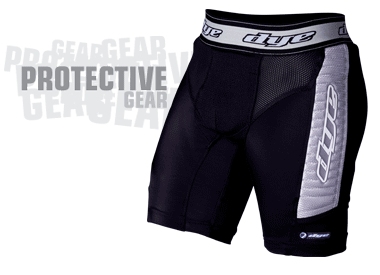
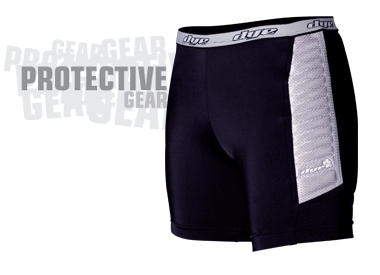 Dye
slide shorts [male + female]
Dye
slide shorts [male + female]
Synopsis
Worn inside combat clothing these are specifically designed for paintball purposes and represented a cross between cycling shorts and hip pads worn for snowboarding. These usually consist of a lycra short with vent holes. On the outside are foam, rubber and plastic padding to protect the coccyx, hips, butt and outer thighs. Most also offer a form of 'cup' protection for protecting your bits. These come in both male and female version and are cut for both.
Cost: c£35
Pros
Offer good all round protection to sensitive areas.
Offer more ergonomic protection than wearing a cricket box
Specifically designed for paintball
Cons
You have to pull them down to use the toilet.
Recommendation: Dye Sliding shorts are ideal for summer or winter. The butt and side padding prevents 'bunker rash' and nasty welts, while at the front is a cup area to which some foam exists and more can be added depending on user preference. The coolmax venting keeps the wearer well vented in summer. They don't add significantly to the players profile, although its probably worth ensuring your combat trousers aren't skin tight if you're going to wear them over them.
Masks are compulsory and offer varying degrees of protection depending on make and model. All should protect the eyes, nose, mouth and ears. The amount of protection they offer to the neck, top or back of the head depends on the model. Manufacturers are now making some masks e.g. JT Headshield that offer all round protection. For the wearer of a 'standard' mask, a number of options exist should he or she wish to protect themselves above the shoulders.
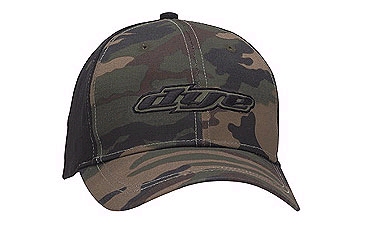
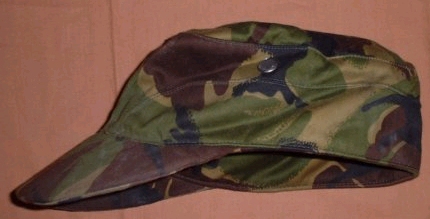
Baseball cap
Synopsis
Standard baseball cap when worn backwards can be held in place by the mask strap. This reversed peak protects the back of the neck
Pros
Cons
Tip: A baseball cap [or DPM cap] can be modified by gluing thin layers of foam inside. This will provide a level of protection and some 'bounce-ability'.
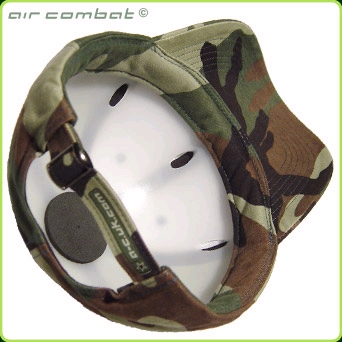
Armoured baseball cap
Synopsis
Some manufacturers e.g. www.aircombat.co.uk have manufactured standard baseball caps pre-fitted with either foam or plastic linings. These allow the player to retain the appearance and benefits of a reversed baseball cap while offering enhanced protection.
Pros
Cons
Hint: You can modify the aircombat cap to be more effective by superglueing some foam to cover the hole where the adjuster band is. This protects the forehead when the cap is worn with a paintball mask.
Headband
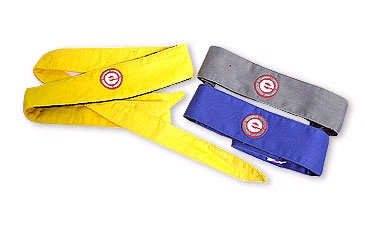
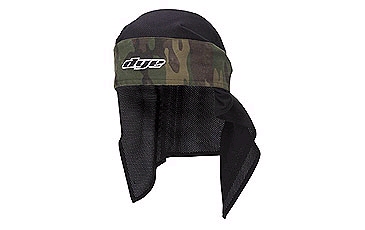
Synopsis
A gel filled headband can prevent sweat dripping into your eyes will offering some protection to the forehead
Cost: £10
Pros
Cons
Replica PASGT Helmet
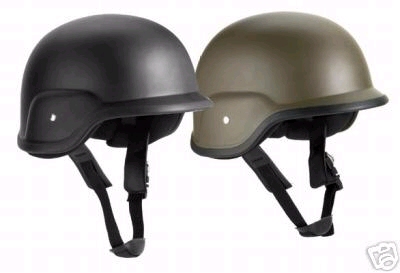 Replica PASGT Helmets
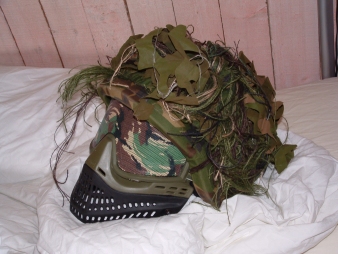 Replica PASGT helmet with JT Flex 7 Mask, Dutch DPM helmet cover + burlap camo.
Synopsis
Cheap replicas of US Army PASGT or MICH helmets are widely available. These look like the real thing, but are many times lighter. While offering no ballistic protection, they'll easily cope with paintballs and will offer greater protection against other impacts than say baseball caps. If you remove the front sweat band a mask such as the JT Flex 7 can fit under the mask [if mask visor is removed]. The mask strap is placed around the back of the helmet, and the helmet chin strap is used to tighten both together. If done correctly, this leaves a snug fit with no slippage.
Cost: £30
Pros
Cons
Skateboard/kayak helmet
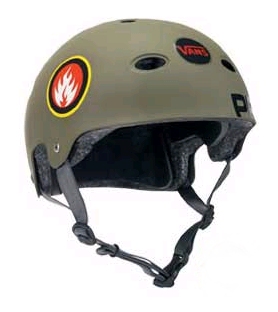 Pro tec
skateboard helmet
Pro tec
skateboard helmet
Synopsis
For many years special forces troops e.g. US Army Delta Force have been wearing Ice Hockey, Skateboard or Kayaking helmets on certain types of operation. Although these offer no ballistic protection, on missions where there is unlikely to be artillery shrapnel, but protection is still required from bumping into objects, they represented a superior alternative to standard Kevlar PASGT helmets. Helmets such as Pro-Tec skateboarding helmets are much lighter than the kevlar equivalents and are specifically designed for 'extreme' sports. They offer superior ventilation and acoustics. Because of their shape, many of these can be used in an ergonomic fashion in conjunction with a paintball mask.
Pros
Cons
Body armour in paintball terms traditionally refers to protection of your chest and back. This comes in a variety of flavours from paintball specific, milsim or 'DIY' milsim.
Paintball specific body armour
TBA
Milsim body armour
TBA
DIY Milsim body armour
TBA